Start with a question
A museum visit can become tiring when the only goal is to see everything. Try arriving with a smaller question: how an artist uses color, how an everyday object was made or what a room reveals about a particular place. The question gives you a way to choose without turning the visit into a checklist.
Use the museum's own visitor information and collection guides to identify a suitable starting point. The Smithsonian's art guide, for example, helps visitors navigate different institutions and interests. Check the relevant museum directly for current access, opening arrangements and any timed-entry requirements.
Spend time before reading every label
Choose one object and look at it for longer than you normally would. Notice its scale, materials, arrangement and the details your eye returns to. Then read the label and see what changes. You may discover that the information answers one question while opening another. There is no need to arrive with specialist vocabulary to describe what you see.
If you are visiting with someone else, compare observations before discussing whether you like the work. One person may notice a background figure, another a pattern or the way light falls across a surface. Those differences can make the encounter richer.
Let the building be part of the visit
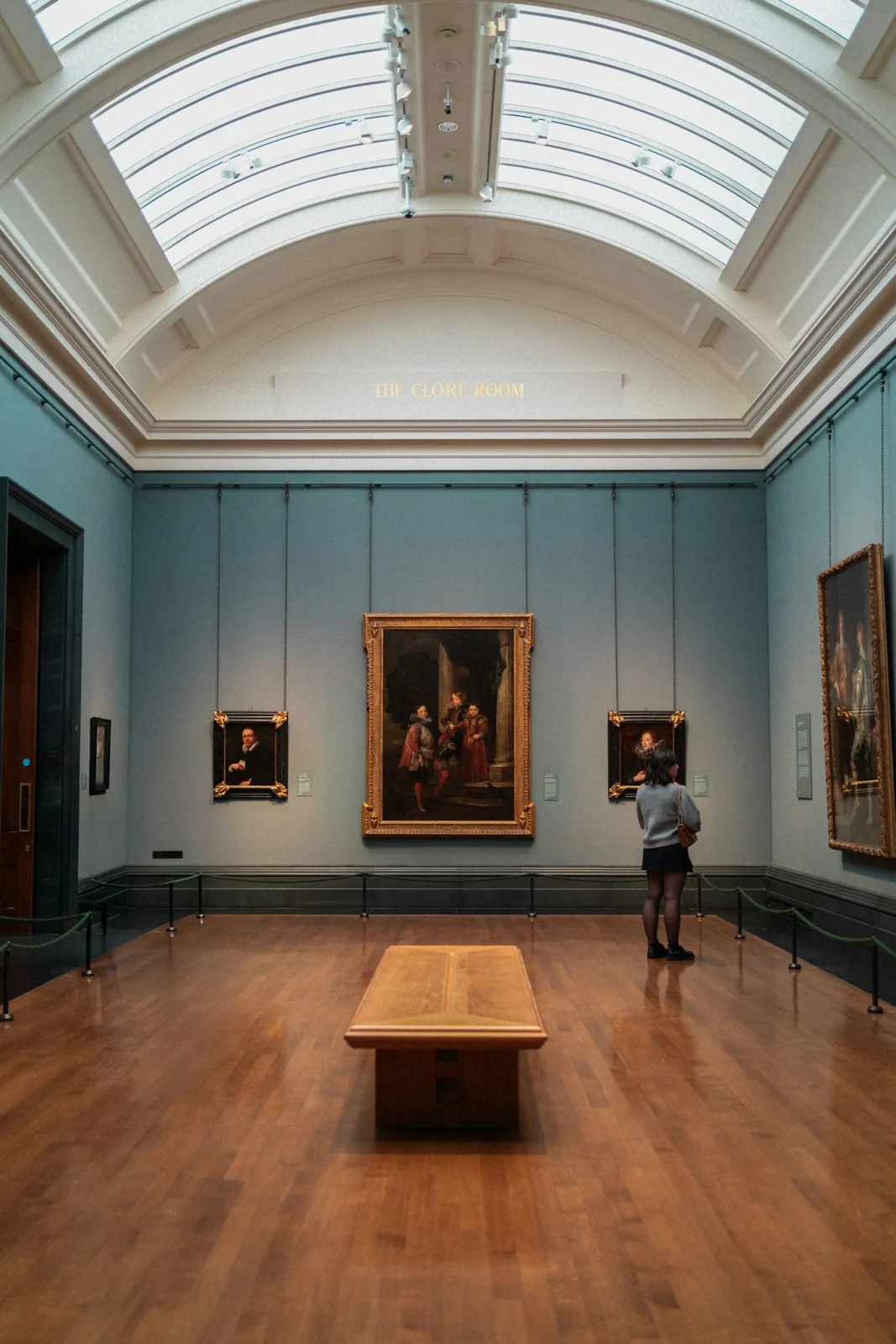
A museum is also a sequence of spaces. Notice where you feel able to pause and where the route becomes crowded. Use available seating and take breaks as needed. A short, attentive visit can be more satisfying than staying until the collection becomes a blur. Follow gallery rules about photography, bags and proximity to objects.
Choose a small number of highlights to remember. A quick note about the work's title and what caught your attention is often enough. If photography is allowed, avoid letting the act of recording replace the experience of looking.
Leave with an unfinished thread
Before leaving, return to one object if the route and time permit. It may look different after the rest of the collection. Alternatively, find a reliable museum resource to explore later. This gives the visit a continuation without requiring you to finish every room that afternoon.
The gift shop, café and exit can be useful places to collect your thoughts, but a purchase is not necessary to make the visit count. What matters is the detail you carry away and the curiosity it creates. Seeing fewer things deliberately can leave a clearer memory than moving past everything at the speed of a map.
If the museum offers a gallery map, mark a small route before starting. It can help you spend less time deciding which doorway to take.
Sources & further reading
Source links provide context for this original feature. Illustration is not documentary evidence of a specific event.