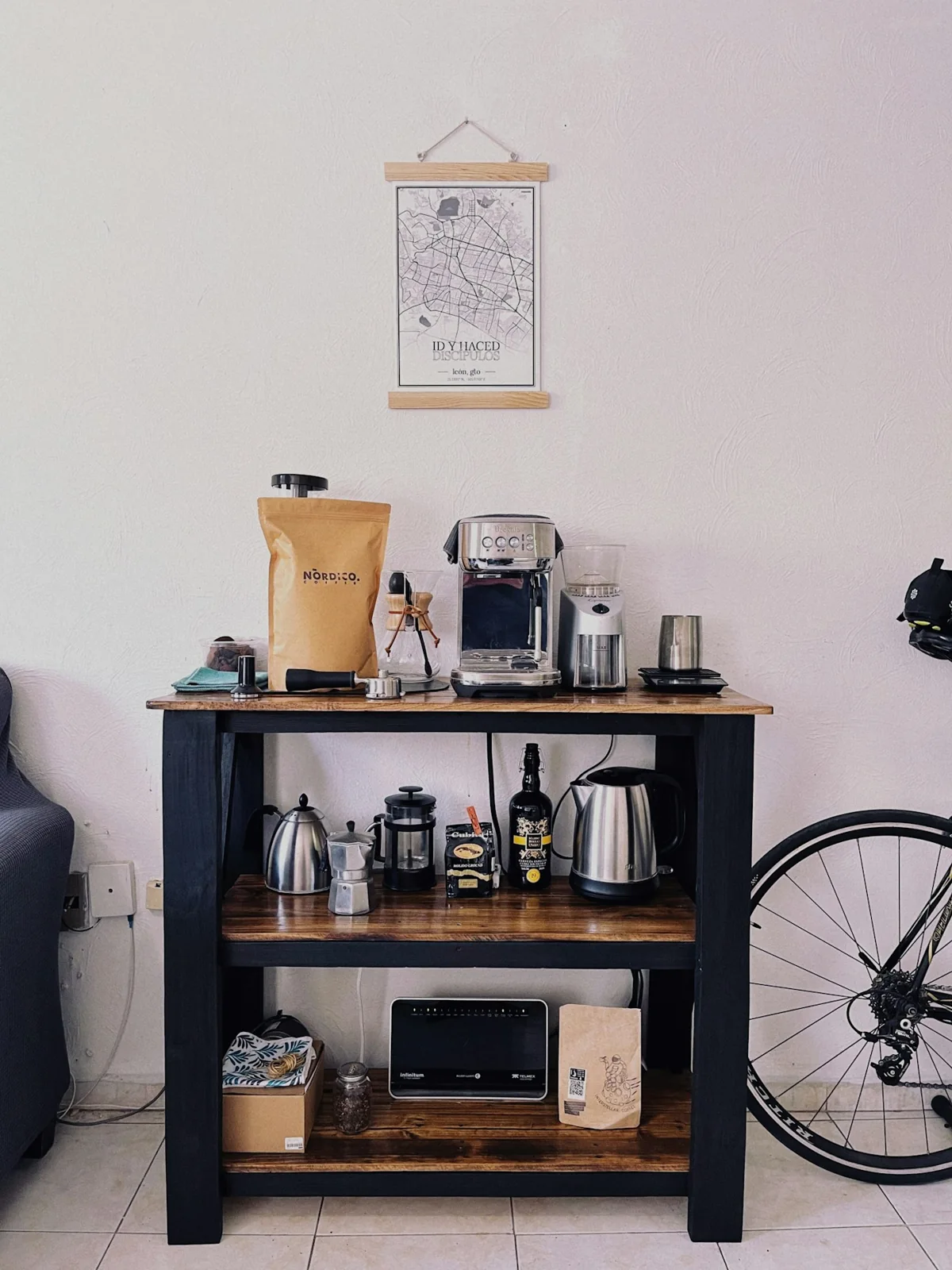
Follow one cup from start to finish
A coffee station is most useful when it removes small interruptions. Make your usual drink and notice each movement: taking down a cup, finding the coffee, filling the brewer and clearing the used equipment. The awkward steps reveal what needs changing. You may need a better place for filters rather than another appliance.
Write down the tools used for an ordinary morning, then separate them from the equipment reserved for occasional experiments. A countertop can support both interests without displaying every item at once. Keep the daily set together and give the rest a deliberate storage place.
Let the counter keep doing its job
Before committing a whole corner to coffee, consider how the surface is used during cooking. A station that blocks food preparation may create more work than it saves. Try a compact arrangement with enough space to set down a filled cup safely. Follow each appliance's placement, ventilation and electrical instructions rather than copying a photograph of a tightly packed setup.
Keep cables, water and hot equipment in a sensible relationship. Avoid making a decorative tray carry more than it can comfortably hold, and do not assume an appliance belongs on a surface simply because its feet fit.
Make the supplies easy to understand
Use the original product instructions for storage and operation. If you move coffee or accessories into another container, keep enough information to identify what is inside. A shared kitchen benefits from obvious locations: cups in one place, filters beside the relevant brewer and cleaning materials stored appropriately away from food.
A small note can help when two people use the equipment differently. Record the steps you prefer without turning them into rules for everyone. The aim is to reduce searching and confusion, not to make an everyday drink feel like a technical examination.
Finish with the reset
The station should be easy to restore after use. Leave a clear route to the sink, follow the manufacturer's cleaning directions and give equipment the time and conditions it needs before storage. A beautiful arrangement that becomes awkward the moment anything is wet will be difficult to maintain.
Test the setup for several mornings before buying organizers. Remove the object that constantly has to be shifted, move the supply that is always forgotten and keep a little empty space. The final result may be modest, but the benefit is concrete: a cup can be made, enjoyed and cleared away without taking over the rest of the kitchen.
Place the equipment you use together within a comfortable reach, while keeping the supplies that are rarely needed in nearby closed storage.
Sources & further reading
- Original editorial planning guide. The practical suggestions in this article are editorial judgments.
Source links provide context for this original feature. Illustration is not documentary evidence of a specific event.