Watch the route before changing it
An entrance collects the evidence of a household's routines: a bag dropped beside the door, shoes under a chair and keys that travel to the kitchen. Instead of treating each item as a separate mess, watch what happens when people come home. Where do they stop first? What do they need to put down? Which objects leave again the next morning? The answers provide a better plan than the dimensions of an attractive storage cabinet.
Start by clearing the path through the doorway. The entrance still has to function when someone carries groceries or arrives with a visitor. Storage that narrows that route may solve the wrong problem.
Make daily things easiest to reach
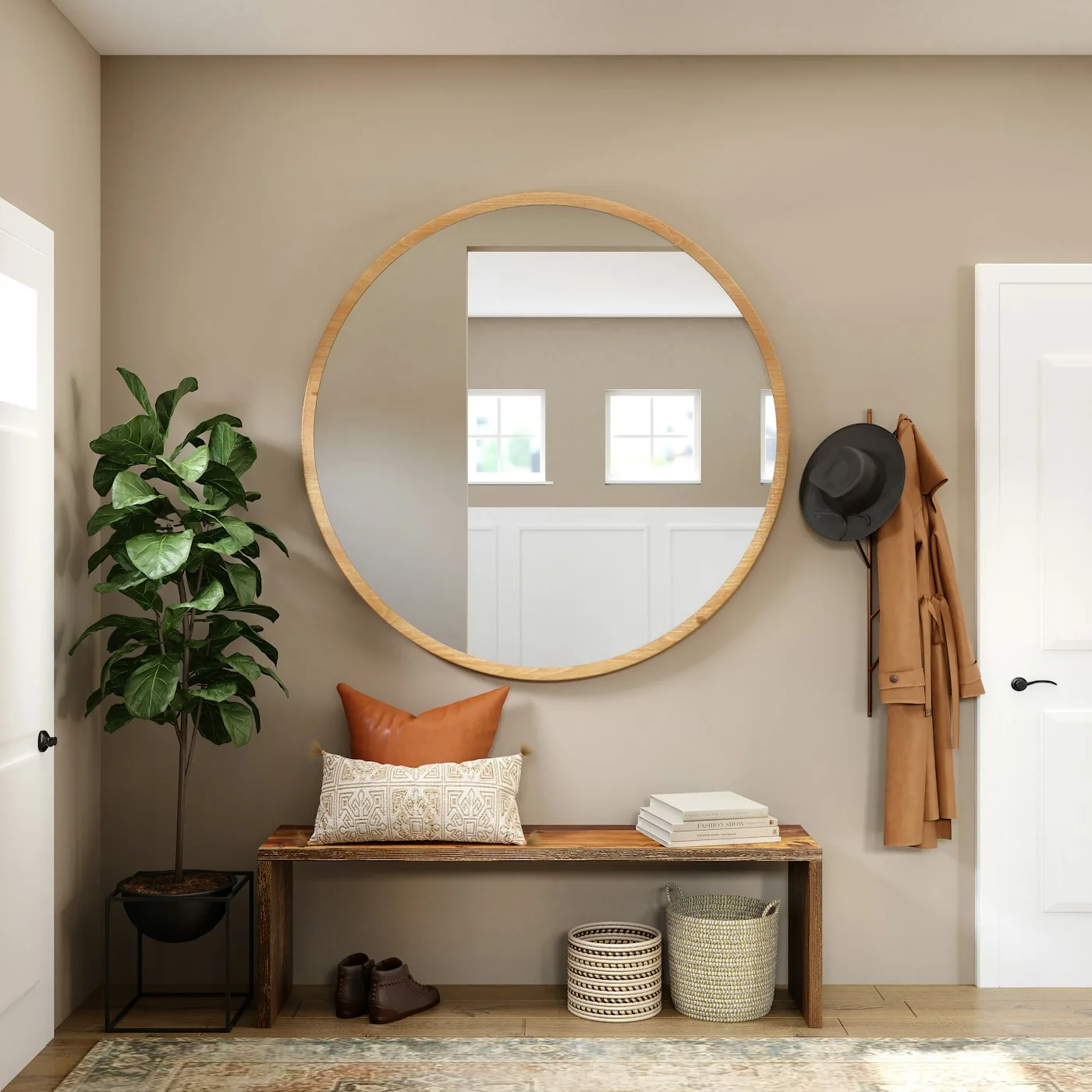
Place the most frequently used items at the most convenient height. A hook that requires stretching or a box hidden behind another box is unlikely to become part of a relaxed arrival routine. Try a shallow tray for small objects, a clearly assigned hook for each everyday bag and a limited space for the shoes currently in rotation.
Seasonal and occasional equipment can live elsewhere. The entrance does not need to hold every umbrella, sports bag and winter coat in the house. Keeping a smaller working collection here makes it easier to spot a missing item before leaving.
Create a place for things in transit
Some objects are not ready for permanent storage. A library book needs returning, a parcel needs posting and an item borrowed from a friend needs to go back. Give these temporary residents one clearly defined place. A tote hanging near the door can be useful if it does not obstruct the entrance or become an excuse to store unrelated belongings.
Review the temporary collection when planning the next day. The aim is to connect an item with a real outing, rather than moving it between surfaces. If something stays there for weeks, decide what action is actually needed.
Choose a reset you can repeat
A useful entrance can be restored quickly. At the end of the week, return spare shoes to their main storage, empty the small-object tray and remove packaging. Avoid an elaborate system that needs special folding or precise arrangement to look acceptable. Open storage may suit one household, while doors and drawers suit another.
Try the new setup before purchasing matching containers. Existing bowls, hooks and baskets can reveal what sizes and positions work. Once the routine feels easy, make selective improvements. The most satisfying entryway is often the one you stop thinking about because your keys, bag and walking route are reliably ready.
Sources & further reading
- Original editorial planning guide. The practical suggestions in this article are editorial judgments.
Source links provide context for this original feature. Illustration is not documentary evidence of a specific event.