Design for the meal you can manage
An inviting dinner does not require every dish to finish at exactly the same moment. Start with a menu you know how to make, then look at where the work falls. If every component needs the oven or your attention during the last few minutes, simplify one of them. The most useful preparation is reducing the number of decisions still waiting when the doorbell rings.
Ask guests about dietary needs in advance and keep relevant ingredient information available. For food handling, temperatures and storage, follow authoritative guidance and the instructions for the ingredients you use. Atmosphere cannot compensate for a meal that is difficult to serve appropriately.
Set the table with real objects
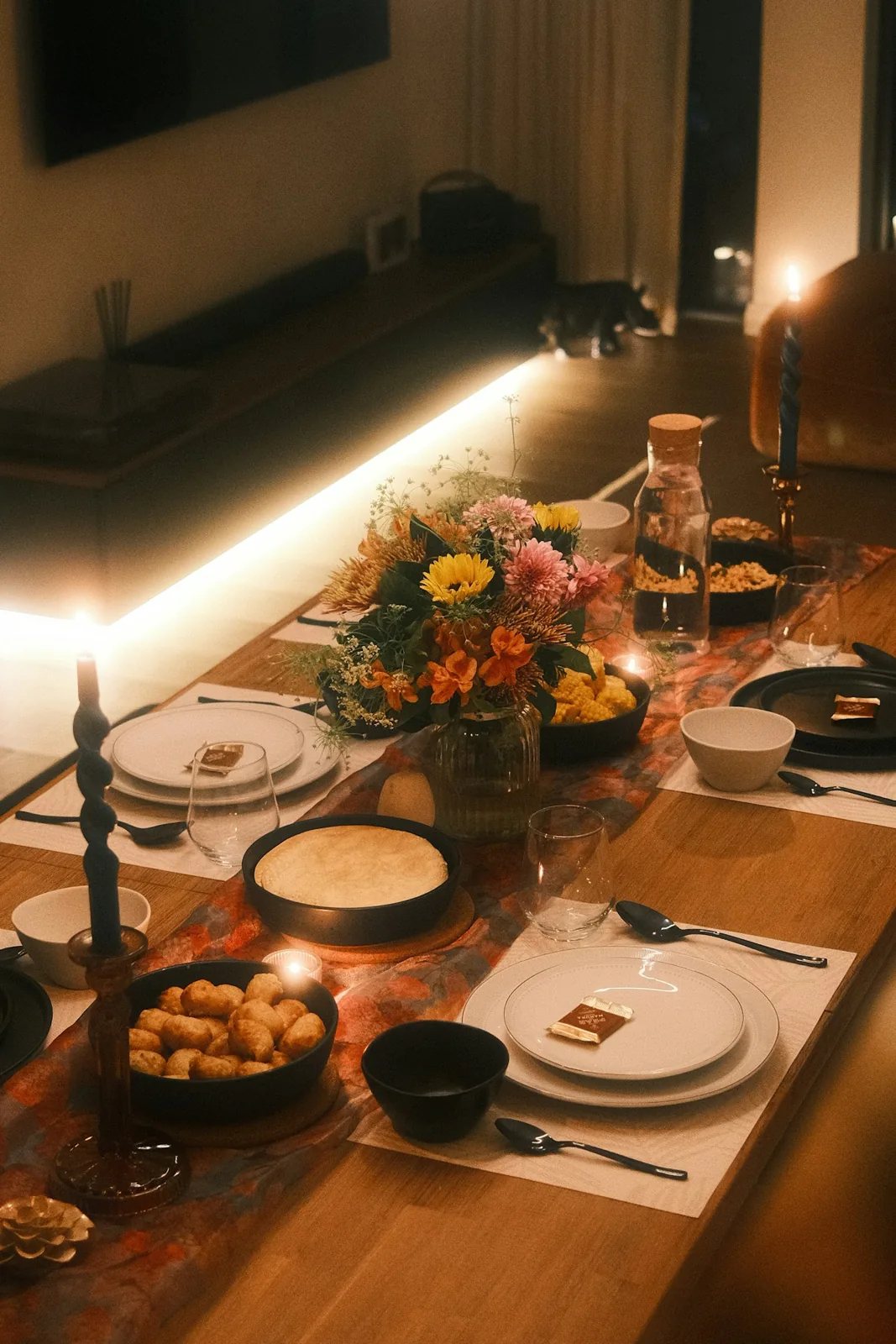
Place the actual plates, glasses and serving dishes on the table before deciding on decoration. Check whether everyone can reach what they need and whether a shared dish has a safe landing place. A centerpiece that leaves no room for food may work better on another surface.
Sit in each position briefly. Notice whether a chair is squeezed against a wall, whether a tall arrangement blocks conversation and whether a guest would need to move several things to set down a glass. These checks matter more than perfect matching.
Give serving a simple sequence
Decide what comes to the table first and what can wait elsewhere. Put serving utensils with their dishes so they do not become a last-minute search. If space is limited, serving part of the meal from a nearby counter can be easier than fitting everything between the plates.
Keep drinks and frequently needed items accessible without forcing guests through the cooking area. A small, clear station can reduce interruptions. It does not need a printed sign or special furniture; it simply needs to be obvious and easy to use.
Leave space for the evening to unfold
Preparation should create flexibility, not a timetable that dominates the gathering. Choose one or two details you enjoy—a folded napkin, a favorite bowl or a small arrangement—and let the rest stay uncomplicated. An ordinary tablecloth and familiar dishes can feel personal when they are part of a coherent, usable setup.
After dinner, note what caused friction while it is still easy to remember. Perhaps a smaller menu would have worked, or the water jug belonged in another place. Hosting becomes easier through these specific observations. The aim is not an event that photographs perfectly from above, but a table where people can eat, talk and settle in comfortably.
A spare serving spoon and a clear place for an empty dish can prevent surprisingly many interruptions once everyone has started to eat.
Sources & further reading
- Original editorial planning guide. The practical suggestions in this article are editorial judgments.
Source links provide context for this original feature. Illustration is not documentary evidence of a specific event.