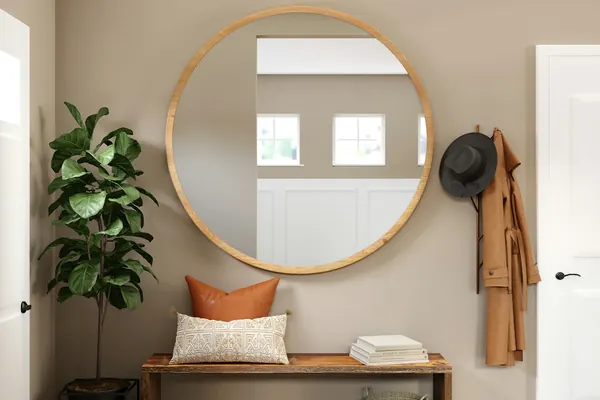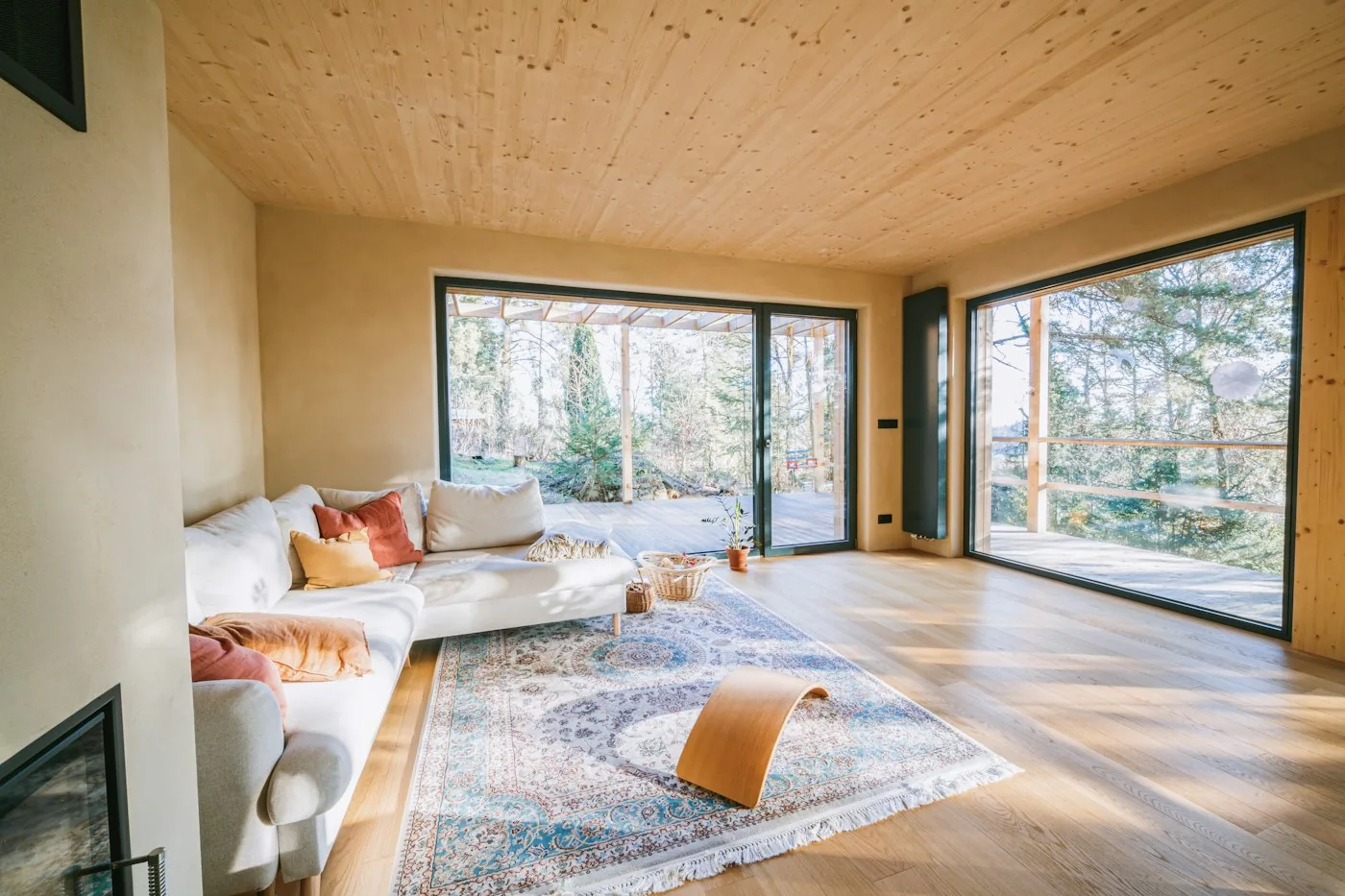
List the activities, not the furniture
A small room may need to host work, meals, reading and guests, but that does not automatically mean it needs four sets of furniture. Start with the activities that happen most often and what each requires. A laptop task may need a clear surface and a nearby outlet. Reading may need a comfortable seat and a light. Occasional visitors may need a place to put a drink rather than an extra permanent table.
Give priority to everyday use. Designing the entire room around an event that happens twice a year can make ordinary days unnecessarily awkward.
Use boundaries that do not block the room
A zone can be defined by orientation, lighting or a small storage unit. Turn a chair toward a window, place work supplies together and let a dining surface remain visibly available. You do not always need a screen or a large divider. In a compact room, separating everything physically may remove the sense of openness you were trying to preserve.
Check the routes between doors, seating and storage. Walk through carrying the objects normally used there. If a stool has to be moved every time a drawer opens, reconsider its position before adding anything else.
Plan the changeover
The difficult part of a multipurpose room is often the transition. Work papers linger through dinner, or a guest setup makes it impossible to reach everyday belongings. Give each activity a closing action. A tray can gather desk supplies, a shelf can hold a folded tablecloth and one basket can contain the materials for a current hobby.
Keep the reset realistic. If changing purposes requires emptying a cupboard and moving several heavy items, the room will probably settle into one permanent use. Prefer arrangements that a person can switch in a few ordinary movements.
Test the least expensive version first
Use existing pieces to mark out the proposed zones before ordering furniture. Tape paper outlines to the floor if necessary, but also test how a real chair moves and how a door swings. A plan can look generous from above while feeling cramped at shoulder level. Leave time to notice those details.
After a week, ask which activities feel easier and which still compete for space. Remove the least useful element before adding another. A small room does not have to imitate a larger home. It needs to support the life happening inside it, with enough clarity that each activity can take its turn without taking over everything else.
Measure storage with its doors and drawers fully open. This catches conflicts that disappear in a tidy photograph but return every day.
Sources & further reading
- Original editorial planning guide. The practical suggestions in this article are editorial judgments.
Source links provide context for this original feature. Illustration is not documentary evidence of a specific event.